

Coffee, as we know, comes in different formats, but when it comes to storage, the goal is always the same: to preserve its aroma and quality until the moment it is prepared. However, a freshly opened bag of coffee beans, a box of capsules and a pack of coffee pods should not all be stored in exactly the same way.
The basic rule is simple: always follow the instructions provided on the packaging. Materials, sealing systems and protective atmospheres may vary from one product to another. In addition to this rule, there are a few good practices that apply to almost every kitchen: limit exposure to air, light, heat, moisture and strong odours as much as possible.
How to store coffee: the five enemies of aroma
To understand where to store coffee, it is useful to know what can alter its aromatic profile most quickly.
Air
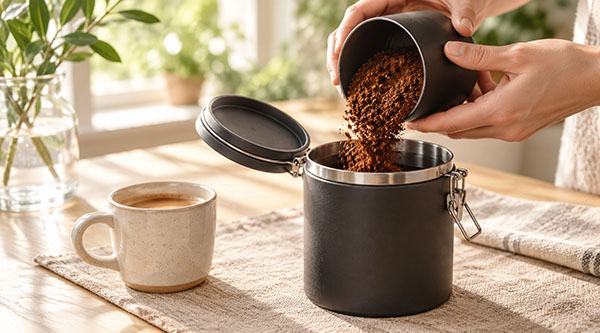
Once the package has been opened, oxygen comes into contact with the product. This is why it is important to reseal the package immediately or, when appropriate, transfer the coffee to a clean, tightly sealed container. Opening the container only for as long as necessary helps reduce exposure to the surrounding environment.
Light
Prolonged exposure to direct light is not ideal for preserving coffee. It is better to choose a closed cupboard or an opaque container and avoid shelves exposed to sunlight for many hours.
Heat
A cupboard above the oven, next to the hob or near a sunny window can become much warmer than the rest of the kitchen. A cool location with a temperature that remains as stable as possible is preferable.
Moisture
Steam and condensation can damage the packaging or enter the container. Do not store coffee near the sink, dishwasher or areas where steam frequently forms. Always use dry utensils.
Strong odours
Coffee should be kept away from spices, cleaning products and foods with strong smells. An effective seal protects it not only from air but also from unwanted odours present in the cupboard.
Storage rules that apply to every format
Before opening, the intact original packaging generally provides the most practical protection. Store it in a cool, dry place away from light, following the manufacturer’s instructions and the date indicated on the label.
After opening:
- reseal the package immediately using the closure provided;
- if the original closure is no longer effective, use a clean, dry, opaque, food-safe container;
- avoid containers that are much larger than the amount of coffee remaining, as this leaves too much air inside;
- avoid mixing products with different dates or flavour profiles unless necessary;
- keep the label or make a note of the date, blend and original instructions if you transfer the contents to another container.
Organising your cupboard according to the “first in, first out” principle also helps ensure that older purchases are used first.
How to store coffee beans
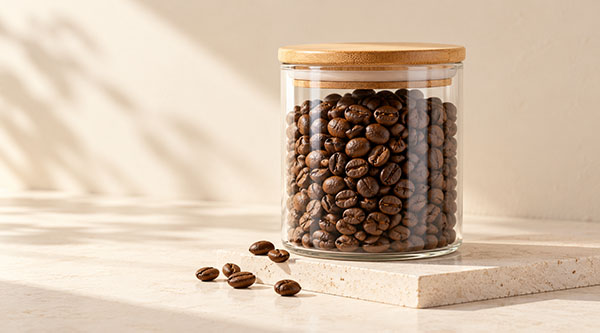
Coffee beans are ground shortly before preparation precisely to make the most of their aromatic qualities. Once opened, reseal the bag carefully or use an airtight, opaque container. Keep it in a cupboard away from sources of heat and open it only when you need to take out the required amount.
If you buy larger packs, consider how much coffee you actually consume. Choosing a pack size that suits how frequently you prepare coffee reduces the number of times the product is opened over an extended period. There is no need to transfer the coffee automatically: if the original bag provides a good barrier and has an effective resealable closure, it may be the best solution. If you do choose to use a container, make sure it is completely dry and free from odours.
To compare the available varieties, visit our section dedicated to coffee beans.
How to store coffee capsules and pods
Capsules and coffee pods are individually portioned, but they still need to be protected until use. Keep the outer packaging intact and do not remove any individual wrapping in advance. A dented or punctured capsule, or one whose seal has been compromised, should not be treated as an intact capsule.
Store packages in a dry drawer or cupboard, away from sunlight, hobs and steam. Open dispensers can be convenient for everyday use, but they should be placed in a protected area and should not become a permanent display next to sources of heat.
What to check before using coffee that has been stored for a long time
The date on the label and the manufacturer’s instructions should always be your primary reference. Before use, also check:
- the integrity of the packaging and seals;
- that there is no visible moisture or condensation;
- that there are no unusual or unwanted odours;
- the condition of the capsules, pods or coffee beans;
- product traceability, especially if the contents have been transferred to another container.
If the packaging is damaged, the instructions are no longer legible or the product shows obvious signs of deterioration, do not take unnecessary risks: contact the manufacturer or retailer before using it.
Practical coffee storage checklist
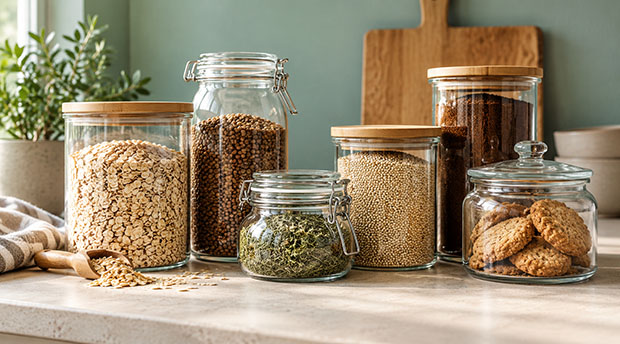
A few simple habits are all you need to store coffee properly:
- choose a cool, dry cupboard protected from light;
- keep coffee away from the oven, hob, windows and steam;
- reseal every package immediately after use;
- use clean, dry, opaque and tightly sealed containers when transferring the coffee is beneficial;
- keep the label, batch number and date if you change containers;
- do not open individually wrapped capsules or pods in advance;
- use older purchases before newer ones;
- always follow the specific storage instructions provided by the manufacturer.
A good cup of coffee starts in the cupboard
Storing coffee properly means protecting it through simple practices suited to its specific format. Check the packaging, limit exposure to air, light, heat, moisture and odours, and choose a stable storage location in your kitchen.
Check the format you use and store each package by following the manufacturer’s instructions first and foremost. If you would like to compare the main types available, browse our coffee catalogue.
FAQ – Frequently Asked Questions About Coffee Storage
What is the best container for storing coffee?
A food-safe container that is clean, completely dry, opaque and has an effective seal. If the original packaging already provides a good barrier and can be resealed properly, it may be preferable to keep the coffee in its original packaging and place the entire package inside the container rather than transferring the coffee itself.
Should coffee be stored in the refrigerator?
No, except in particular circumstances. For everyday use, a cool, dry and dark place is often the simplest option. When coffee is stored in the refrigerator, condensation and odours need to be managed carefully. Always follow the storage instructions provided on the packaging.
Can coffee capsules and pods be stored in a dispenser?
Yes, provided that the dispenser is clean, dry and positioned away from light, heat and steam. Do not remove individual wrapping when present, and do not use capsules or pods with damaged seals.
Should coffee be transferred to another container immediately?
Not necessarily. If the original packaging is intact, resealable and designed to protect the product, it may already be perfectly suitable. Transferring the coffee is useful only when the new container offers better protection and does not result in losing the information provided on the original label.